You know you're underpriced. But every time you consider raising prices, the same fear stops you: what if customers leave? So you hold the price another year, absorb every cost increase yourself, and watch your margin erode while you work harder than ever. It's one of the most common and most expensive mistakes small business owners make — and it rests on a fear the numbers usually don't support.
The takeaway up front: a modest, well-communicated price increase almost always leaves you more profitable, even after you lose a few customers — because the customers you lose are your least profitable, and the ones who stay now pay you what the work is worth. Raising prices isn't a gamble you win by being lucky. It's an arithmetic decision you win by doing the math first and communicating like an adult second. The numbers below are general illustrations, not a forecast for your business — run your own.
First, confirm you're actually underpriced
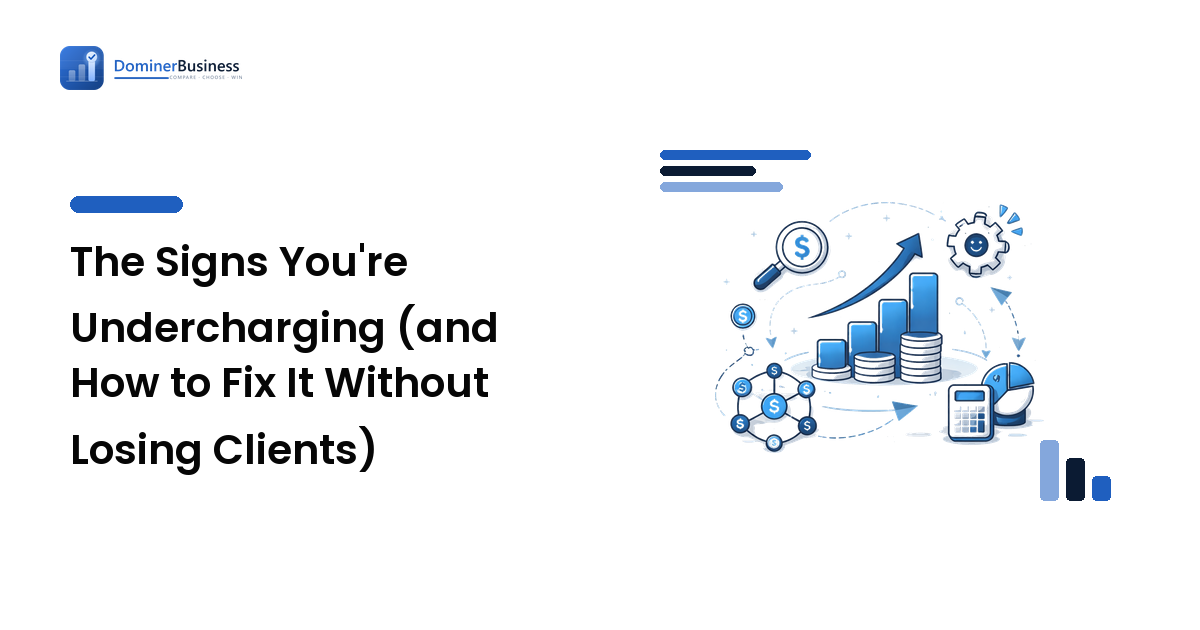
Don't raise prices on a hunch — raise them because the evidence says so. Four signals tell you you've been leaving money on the table:
- You're at capacity and turning work away. If you're fully booked with a waitlist, demand exceeds supply — the textbook signal your price is too low.
- Almost nobody flinches at the price. If essentially every prospect says yes without hesitation, you're winning on being cheap, not on value. A healthy price draws the occasional "that's more than I expected."
- Your costs have risen and your price hasn't. Materials, wages, software, rent — if these have climbed while your price stayed flat, you've already given yourself a pay cut.
- You're cheaper than comparable competitors. Being the low-price option isn't a strategy unless you're also the low-cost operator. If your quality matches rivals who charge more, you're underpriced.
If two or more are true, the risk isn't raising prices — it's continuing not to.
How much should you raise prices?
The instinct is to creep — add 2% and hope nobody notices. That's a mistake: a 2% rise barely moves your profit but still triggers the same conversation a bigger one would, so you pay the awkwardness without the reward. If you're going to have the conversation, make it count.
For most small businesses that have held prices flat too long, a 10-15% increase is a sensible first move — large enough to meaningfully repair your margin, small enough that loyal customers absorb it, and defensible if anyone asks. If demand barely dips afterward, you were badly underpriced and can move again in six to twelve months rather than fixing years of undercharging in one jump.
Why even a small percentage matters so much: a price increase drops almost entirely to profit. If your cost to deliver a job doesn't change, every extra pound or dollar of price is pure margin — so a 10% rise on a thin net margin can lift profit far more than 10%. It's the same logic behind the small business finance guide: the gap between what you charge and what it costs you is the number that funds the business, and a price rise widens it directly. Understand that leverage before you decide how far to move.
Communicate it like you're confident, because you should be
How you deliver a price increase matters more than the increase itself. Most customer losses come not from the new price but from feeling blindsided. The fix is simple, direct communication:
- Be plain, not apologetic. "From the 1st of next month, our rate moves to X." Over-apologising signals you don't believe the price is justified — and invites pushback.
- Give existing customers notice. A few weeks' warning, in writing, lets people plan. Springing a new price on someone at the till turns a price change into a grievance.
- Lead with value, briefly. One short line on what they get — reliability, quality, service — reframes "it costs more" into "here's what you're paying for."
- Don't over-justify. "Rising costs" is true and sufficient. Listing your hardships makes the increase sound like your problem, not a normal business decision.
- Tell new customers nothing. New prospects simply see the new price — there's no "increase" to explain. The whole conversation only exists for people who knew the old one.
A simple price increase message that works
Keep it three sentences — notice, reason, value:
"Thanks for being a valued customer. From [date], our price for [service] will be [new price], our first adjustment in [time period] as costs have risen. We're committed to keeping the [quality/reliability/service] you rely on, and we appreciate your continued business."
No grovelling, no essay — send it like the routine business decision it is.
Expect to lose a few customers — and know why that's a win
Here's the part that frees you from the fear: you probably should lose a few customers, and they're the ones you can most afford to. The customers who leave over a 10-15% increase are, almost by definition, your most price-sensitive — the ones who haggle, pay late, demand the most, and deliver the least margin. So a price rise doesn't just lift your margin; it quietly upgrades your customer base, trading demanding low-payers for fewer, better-paying clients.
The math makes it concrete. Say you have 100 customers paying £100 each — £10,000 in revenue. You raise prices 15% to £115. Even if you lose 10% of them, you keep 90 paying £115, or £10,350 — more revenue from fewer customers, with less work and lower delivery costs. You'd have to lose over 13% just to break even on revenue, and far more to be worse off on profit, since the ones who left were your cheapest to lose. The fear assumes a mass exodus; the reality is usually a small, beneficial trim.
If you can't shake the nerves, de-risk it: raise prices for new customers first. Lift the price for new business now and move existing customers later — you'll get real-world proof that prospects happily pay the higher price before you touch a single current relationship.
FAQ
How do I know if I'm charging too little?
Watch for four signals: you're at capacity and turning work away, almost no one hesitates at your price, your costs have risen while your price hasn't, and you're cheaper than comparable competitors despite matching their quality. Two or more means you're underpriced, and holding the price costs you more than raising it would.
How much should I increase my prices at once?
For most businesses that have held prices flat too long, 10-15% is a sensible first move — big enough to repair your margin, small enough that loyal customers absorb it. A 1-2% rise triggers the same conversation for almost none of the reward. If demand barely dips afterward, you were badly underpriced and can move again in six to twelve months.
How do I tell customers about a price increase without upsetting them?
Be plain and confident, not apologetic. Give existing customers a few weeks' written notice, state the new price and date clearly, add one honest line on the value they get, and keep any explanation short — "rising costs" is enough. Most upset comes from feeling blindsided, not from the number itself, so clear, respectful, advance communication does most of the work.
What if I lose customers when I raise prices?
Expect to lose a few — and know that's usually a win. The customers who leave over a modest increase tend to be your most price-sensitive: the hagglers, late-payers, and lowest-margin accounts. Keep 90 of 100 customers at a 15% higher price and you've grown revenue while cutting your workload. The break-even churn is almost always far higher than the churn you'll actually see.
Next step
Stop subsidising your customers out of fear. Pick your most clearly underpriced offer, confirm the signals, and raise its price 10-15% — then tell existing customers plainly, give a few weeks' notice, and lead with the value they get. Expect a small, beneficial trim to your most price-sensitive buyers, and run the break-even math so you can see in advance how many you'd have to lose before it even mattered — almost always far more than you will. Owners who stay underpriced aren't the ones who can't raise prices; they're the ones who never tested the fear against the arithmetic. Build the rest of your pricing and finance playbook at dominerbusiness.com.